

Rivers are Remarkable
Sunday 24 September is World Rivers Day, a time to appreciate our waterways and to resolve to preserve them.

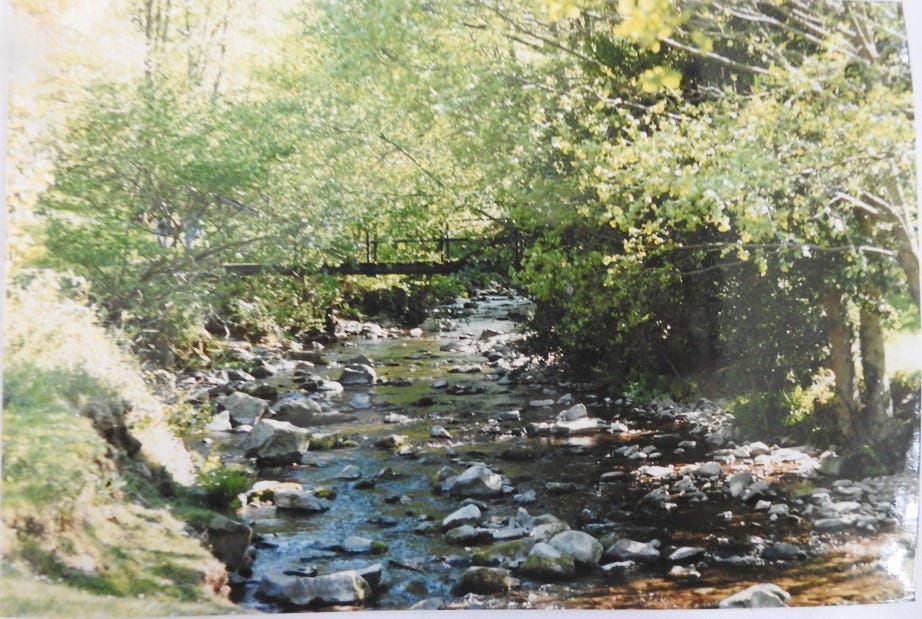
When I was a child we used to spend a lot of time in the summers wading in the beautiful clear little stream behind our house, building partial dams and tickling for trout and bullheads and generally investigating the wildlife that lived in it. It was an idyllic time, except when someone upstream who had broken the law and directed their sewage output into the stream pulled the chain. And, fed from Exmoor, there were times when it turned from a beautiful little stream into a dangerously raging torrent. I don't recall it ever completely drying up even in the driest of summers, however, and it was a great place to cool off.
Not every river was clean then, of course. Industry made its mark. In my area in the small town next to the sea, the river often took on strong colours thanks to the local print works.
Perhaps you had a stream to play in when you were a child, or watched boats going by on a major river.
Perhaps the pristine stream or river you knew then is polluted now - by fertiliser runoff, increased sewage or industrial pollution due to population growth. Or maybe it has been built over or straightened with concrete sides.
Perhaps it has dried up, due to over-extraction or failure of the snows that used to melt and feed it, thanks to global warming.
Or perhaps it has turned into a destructive torrent thanks to the greater rains that some of us are getting these days. Major floods in my area back in the day included the Lynmouth Flood of 1952 with a loss of 34 lives and the 2004 Boscastle flood. But these pale into insignificance compared to recent world-wide floods, exacerbated by human-caused climate change.
As climate change denialists love to tell us, truthfully, extremes of weather are not new. But they ignore the fact that they are more frequent, widespread and extreme these days.
Rivers are part of the water cycle
Rivers come in all shapes and sizes, from tiny streams at their sources to massive rivers like the Amazon. From straight stretches cutting their way through soft rock to form gorges, to meandering sinuously on the flat, sometimes leaving oxbow lakes behind.
They don't always keep to the same path, cutting their way through the softest rock, shifting due a flood or due to glaciation, like the River Severn. Sometimes they go underground, as at Cheddar Gorge.
Rivers form part of the water cycle. Water evaporates from the surface of the sea and the land, then falls as rain or snow on sea and land. On land it can erode mountains and run directly down to the sea in rivers, or moisten the soil or soak down to form reservoirs like the Ogallala Aquifer, which is being over-extracted. It also forms lakes, which may or may not have rivers running out of them.
There are also vast rivers in the oceans, for example the Atlantic meridional overturning circulation (AMOC). Such currents have changed course considerably over geological time as the continents have drifted, either blocking their way or opening up new routes, and due to ice ages. But now the AMOC may be slowing down. The surface water is becoming warmer and less salty and is therefore not sinking as readily for its return journey.
Rivers are part of the cycle of life and, thanks to us, of death and destruction
Typically humans can live without water for around three days, but of course there are vast communities of life that live in rivers and would not last long if their river dried up or became polluted. The land near rivers can benefit too; for example the flooding of the Nile, or trees near salmon rivers benefitting from the nutrients spread when bears deposit salmon carcasses. Humans have long extracted water from rivers to irrigate their crops, and have harvested fish and other wildlife and plants such as cress from the rivers themselves. We've also used them to pan for gold and other minerals. Rivers support part of the life cycles of trout and some eels as well as salmon, considered delicacies by some. Man-made dams on rivers have prevented salmon from reaching their traditional breeding streams.
Some rivers are special, supporting life that exists nowhere else, for example chalk streams. Their nature depends on the geology of the land they pass through or under. We have eliminated beavers from many rivers - they built dams which created unique habitats for other wildlife and which slowed the rush of floodwater downstream.
When we build in flood plains, we have only ourselves to blame if our homes and businesses get flooded.
What rivers give, they can also take away. After heavy rain, particularly following wildfires and the ripping up of hedges and draining of bogs, rivers carry away topsoil. With it they carry our fertilisers and pesticides that we have spread on our fields. Some poison the wildlife, for example asphyxiating fish and causing algae blooms and dead zones out to sea or neonicotinoids killing bees. Sewage has been found to be even worse for rivers than agricultural run-off. When rivers burst their banks and invade our world, they can pick up all the pollution in the area. This can include land mines and, potentially, nuclear radiation.
Recently in Jackson, Mississippi an excess of water - floods - took out the drinking water of 150,000 residents of the city.
Modern mines can extract many toxic substances from the earth in which they were safely contained and spread death downriver. Mountaintop removal mining is particularly destructive.
Floods can also take human life. Thousands died in Libya this year, for example.
While some of the harm to nature and to humans is natural, much of it is because of decisions we have made, and we are paying the consequences more and more, as the Libyan disaster shows. We ignore the natural cycle at our peril.
Rivers, cities and man
Many of our cities have grown around rivers because rivers are a way to transport goods and because they power water mills. For example at Quarry Bank Mill the river powered the cotton mill. Since the industrial revolution rivers have been used to transport wood and coal to power our steam engines and later technologies. Pollution is no longer confined to small areas such as early mines. We've dumped our industrial waste and sewage into our rivers, making them dangerous or unpleasant to live near or to extract drinking water from. In 1969 the Cuyahoga River in Ohio was so polluted that it caught fire. In Flint, Michigan the drinking water was contaminated with lead and possibly Legionella bacteria when the source was switched to the Detroit River.
With rivers running low, their ability to be used for transport is reduced, as happened to Germany's Rhine last year.
Many rivers in cities have been straightened and hemmed in by concrete, and even covered over, making them deserts for wildlife and in some cases making floods worse.
The Thames in London was biologically dead until a major clean-up was launched, but there are still instances of fish kill due to pollution and it suffers from that modern scourge, plastic pollution. Rivers have been found with traces of disease such as COVID, and of drugs, some of which cause gender change or malformation in wildlife.
We have built some of our nuclear power stations next to rivers so that their water can be used for cooling. Warmer water is returned to the river. This can attract wildlife such as manatees. Whereas riverside nuclear plants won't be hit by tsunamis as at Fukushima, they can be affected by earthquakes and floods, including those caused by dam failures, and they may have to release radioactive water. And if the river water gets so warm that it cannot cool the plant, as is happening more often with global warming, the plant has to shut down.
When our rivers are too dirty to swim in, that can have a detrimental affect on tourism for the area.
Sometimes rivers silt up when they reach the coast, and trade is much reduced, as happened at Ephesus.
In the UK recently, the Tory government proposed scrapping rules intended to ensure that any new build housing did not add to the amount of pollution going into rivers ("nutrient neutrality"). Indeed, they said that councils must assume that there would be no such increase. Fortunately this was defeated in the House of Lords. Only time will tell if they will continue to put nature last. It does not look promising.
Rivers and disputes
Our water companies are extracting more and more water for cities as well as for irrigation, causing some rivers to dry up altogether. So does drought. When rivers dry up, or their floods make agriculture impossible as in Greece recently, this does not just cause short term food shortages which may be felt anywhere around the world. It also causes migration, and if too many migrate to a neighbouring country that can increase tensions.
Melting glaciers can cause rivers to dry up. Billions depend on Himalayan glaciers for water, and as they dry up there will be massive migration and food shortages.
When too much water is extracted upstream, people and cities downstream suffer. Mexico and the USA are in dispute over the water rights to the Colorado River, for example.
Often rivers form boundaries. There can be disputes as to who has a right to the water. In the USA, the Supreme Court recently ruled that the Navajo Nation had no right to water from the Colorado River, despite it forming a border of their land. Disputes can also arise when a river changes its course.
Many refugees from drought and/or strife from Central America head for the USA via Mexico. When they reach the border at the Rio Grande some of them die trying to cross, and some of them face a razor wire border wall erected in the river by a hostile governor.
We need to learn to love our rivers.
A few rivers have been given legal rights, but most of us still take rivers for granted, dumping our rubbish in them and then complaining when they are too polluted for swimming or water extraction, or when they flood our homes, or dry up. Often we do not care about the flora and fauna that live in or beside them. But by taking them for granted we make the world a far worse place for ourselves as well as the rest of nature. It is time for us to love and protect our rivers, by cleaning up our act, working with nature rather than against it, and by stopping climate change.
Rivers are beautiful, often peaceful places. We should learn to love and to respect them, just as good sailors respect the sea. What goes around comes around, including sewage and all the other bad things we are doing to our rivers. Let's stop doing that.
Make Earth Great Again, including our rivers.