

Trees Are Tremendous
28 September is National Tree Day - not that I need any excuse to enjoy trees

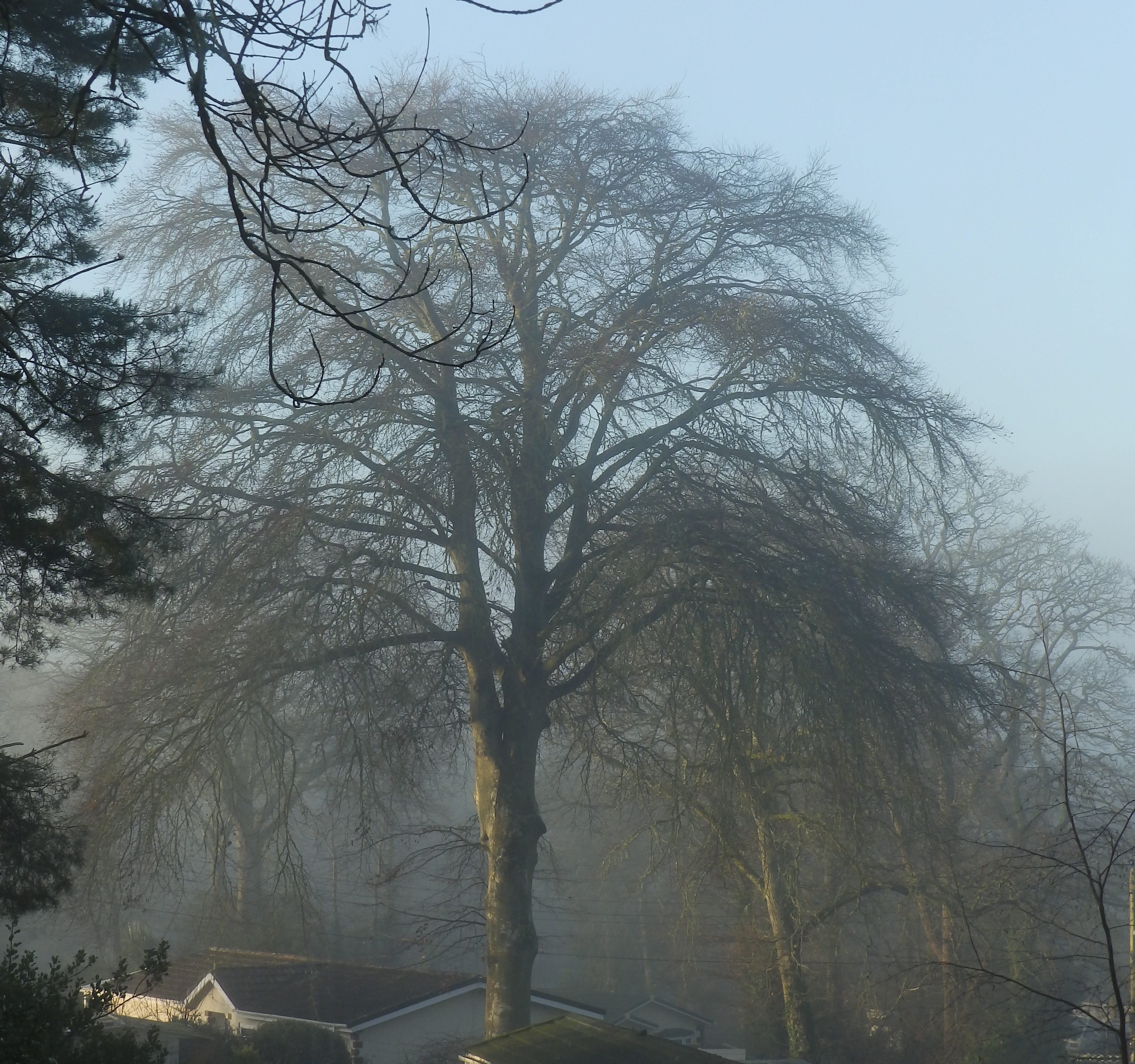
When I was a child my uncle next door was a timber merchant and owned his own woods which we played in a lot. There were a lot of trees in the valley on the edge of Exmoor. We climbed on them, swung from them, built shelters out of wood, ate some of their fruit, took shelter from hot sun under them. They were home to a rookery and many other birds. They prevented the stream from getting too hot for the fish in summer.
This time of year, acorns keep falling on my head and my roof. Sometimes I think I should get a hard hat for when I go out the door. Ash leaves are already falling, and oak leaves and others won't be far behind. I'll have a lot to rake up and compost, and gutters to clear. During the peak of summer, they kept the house from getting too hot. The hazel trees produced nuts, but as usual the squirrels beat me to them.
We find trees useful
Mankind has been using trees for fuel ever since the discovery of fire. And as well as burning branches, we have burnt coal (ancient trees, etc.), and charcoal (wood partially burned with little air). Without this, the industrial revolution would never have taken place as we used it to drive steam engines, firstly in mines and later in factories, on farms and for transport. While oil was used long before, widespread use did not begin until after the opening of Edwin Drake's 1859 well near Titusville, Pennsylvania. Even today, supposedly environmentally-friendly biomass fuel plants are being fed trees.
Trees have also long been used as handles for tools, as fencing to keep out wild animals and to build ships and buildings. They've made wheels for wagons and barrels for alcoholic drinks. Bark has been used for tanning and medicines. Quinine first came from the bark of a cinchona tree in Peru. Oak galls were used for ink. Some extol the benefits of walking in forests for health - forest bathing or therapy or immersion.
Druids worshipped trees, and yule logs were originally made of oak (not chocolate, which comes from the cacao tree!). Spices such as nutmeg and mace come from trees. Some edible berries come from trees, for example juniper, elderberries (I have some) and rowan. Many nuts are edible, and very good for us.
In the 18th Century, massive amounts of oak were needed to build Royal Navy ships, much of it imported. Long before that, Romans imported a lot of wood from their empire. So trees have let us catch fish, trade goods across seas and go to war. In Africa, deforestation is carried out for agriculture, and in some areas poor people walk long distances in search of wood for fuel for cooking. The Amazon is also being deforested. When trees are removed or die in forest fires, that can lead to landslides too.
You would not think so from the number of trees and the hedgerows containing them that have been grubbed up to allow for larger machinery, but trees are good for agriculture. They shelter livestock from the weather and the right ones can add variety to the animals' diet. They prevent topsoil from being washed or blown away. In response to the dust bowl caused by removal of trees, the USA planted 220 million trees. Eleven African countries are planting a wall of trees to combat desertification.
Britain's tree cover has steadily declined since the Middle Ages, and fell sharply around World War One. It has increased since then, but a lot of the increase was in commercial forests for telegraph poles and the like, not for biodiversity. A new National Forest has been planted more recently in the Midlands, but some new plantings have been a total waste of time and money and farmers are not being given enough support to replant trees. If only we had not removed them in the first place. Man's war against nature is a war against ourselves
Trees also provide much-needed shade in our cities. The US needs 30 million new trees to combat shade disparity, one study found. In the UK, however, some cities have been felling their trees, for example Sheffield. Trees can also absorb pollutants from the air, making city air healthier to breathe.
Some people have always appreciated trees. The original Arbor Day, as Americans call it, took place in Spain in 1594, and the practice of getting together to plant trees has spread around the world. Here in the UK we have the Woodland Trust which works to conserve Woodland and the Forestry Commission, which initially focused on expanding woodland for timber, creating large barren forests of pines as straight as telegraph poles, but has diversified since.
Dendrochronology not only allows us to tell the age of a particular tree but also shows how the seasons varied from year to year where it lived. Using overlapping samples from live trees and dead timber, it can be possible to study the variation of climate in an area for a very long time. And the discovery of signs of long-dead palm trees in Antarctica shows us how the climate has changed.
Trees are part of the cycle of life
Trees provide habitats and food for many other species. The Oak, for example, is a haven for 2,300 wildlife species, plus bacteria and other microorganisms, and they can live for over 1,000 years.
Trees suck up groundwater through their roots and transpire it through their leaves. The water condenses on tiny organisms and detritus in the air to form raindrops which form clouds, providing 75% of the world’s fresh water supply. They create local microclimates where life can thrive. By taking up water they slow down run-off into streams and rivers. They also bring up nutrients that plants with shallower roots cannot access.
Fungi help trees to absorb CO2, water and nutrients. They form a "Wood Wide Network" that allows nutrients and information about dangers to be passed from tree to tree.
Trees can help prevent soil erosion.
Trees are not the first to colonise new islands or reconolise land we have poisoned and/or abandoned, but they soon follow, even at Chernobyl, providing homes for the animals that came in to replace that killed by radiation.
Deforestation
Cutting down trees reduces shade for us, our livestock and our crops, and can lead to desertification. It is very bad for the species that live in the forests, too.
It also brings us into contact with populations of creatures - and their diseases - for the first time. These zoonotic diseases include Ebola, HIV, bird flu, swine flu and COVID.
Wildfires are part of the natural order of things - indeed, some trees such as Giant Sequoias need them. But wildfires are becoming more extreme thanks to climate change, and even the giant sequoias may not survive. Canada is experiencing its worst fire season ever, for example, and Russia recently had one.
Other causes of harm.
When we spray trees with pesticides or introduce predators against alien pests we often kill beneficial insects as well as the ones we want to get rid of.
Monoculture of trees allows their pests and diseases to increase their numbers considerably as they can just move from one tree to the next, for example bark beetles in the US.
Human-caused global warming is enabling some pests and diseases to extend their ranges, so they can infect more trees, or to do more damage, for example ash dieback, which has affected one of my trees, and honey fungus in the UK.
International trade in trees can spread pests and disease to places where the trees have no defence. Moving saplings around the country can also help pests and diseases spread.
Trees have been known to live well over 4,000 years, so cutting mature trees down seems like a crime.
Sometimes it is sheer vandalism, as in the case of the tree at Sycamore Gap, Hadrian's Wall, which had been found to have been cut down this morning. It was beautiful. You may have seen it in Robin Hood: Prince of Thieves. The reactions show that trees can be part of our souls.
We need to respect trees
Trees are one of the great wonders of nature, and are intertwined with it. Treating them well is treating ourselves well. We all need to be tree-huggers too.